
WOULEY · Materials & craftsmanship

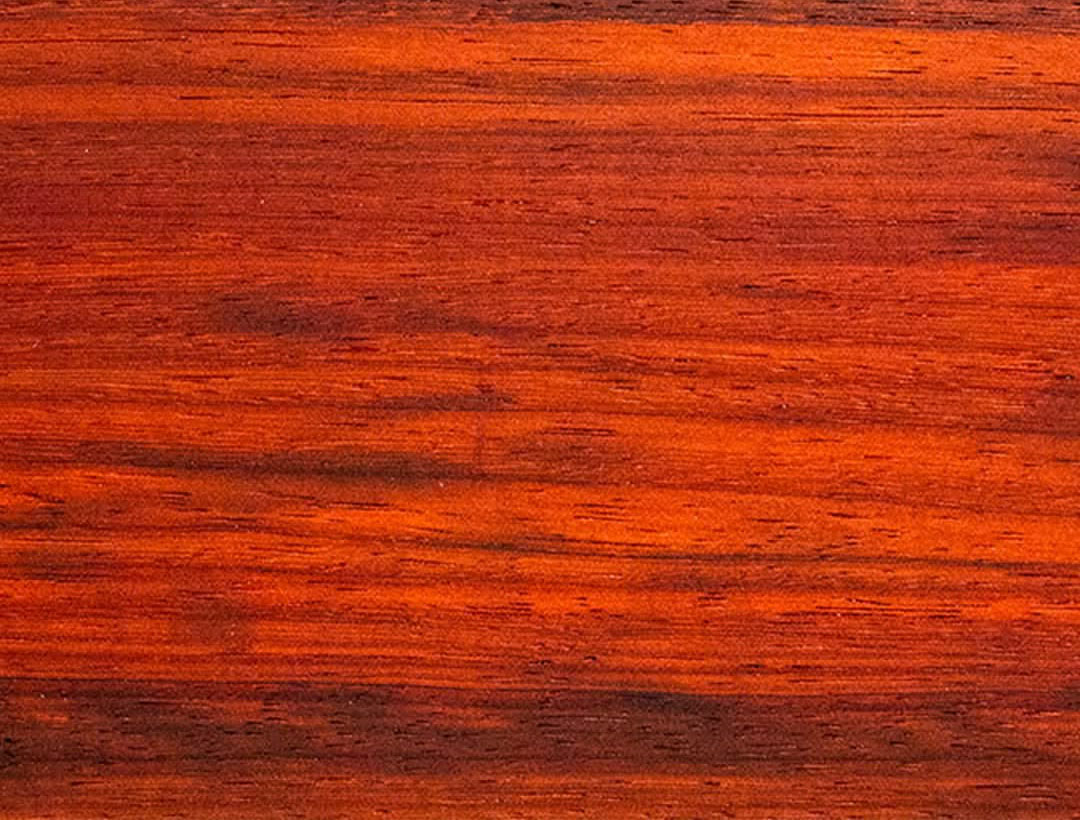
Wenge veneer, dark tones and natural grain. Photo: Philipp Zinger / Wikimedia Commons — CC BY-SA 4.0 .
Some woods radiate light, while others seem to absorb it. Wenge belongs to the latter. Deep brown, streaked with almost black veins, it has the understated elegance of a tuxedo and the density of stone. Yet behind its dark refinement lies one of Central Africa's rarest woods, steeped in legends — a tree once feared at night and honored by day. At WOULEY, where wood is our primary material and Africa our point of reference, Wenge holds a place of distinction.

01
A rare tree of the swamp forests
Wenge refers to the botanical species Millettia laurentii, a member of the Fabaceae family. It grows in the humid and swampy forests of Central Africa — Cameroon, Gabon, Equatorial Guinea and both Congos — within narrow bands running parallel to the equator, where the wind carries its winged seeds. It grows slowly, very slowly: a mature Wenge tree may have lived for one hundred and fifty to two hundred years.
Depending on the region, it is known as awong in Cameroon, Congo rosewood, false ebony or ironwood — names that evoke its deep color, hardness and prestige. Its slow growth and limited natural range make it today a wood as precious as it is rare.
02
The tree of the night: the wood of sorcerers and chiefs
Imagine night falling over the forests of the Lower Congo. Among the great trees, one stands apart for its dark wood: Wenge. Stories tell that sorcerers made it, after nightfall, the setting for their secret ceremonies — a tree of power and mystery, one not approached without respect.
And yet, the same tree was also regarded as honorable: it was planted within the compounds of chiefs as a symbol of dignity and strength. Tree of the night and tree of the powerful, Wenge has always carried these two faces at once.
Palace of sorcerers by night, a symbol of honor in the chief's compound by day: Wenge has always held one secret — its power.
Its mystique may lie in one striking detail: cut into its bark and a thick red liquid can emerge, almost like blood-red sap. Among Kongo peoples, it was known as kiboto; preparations made from its bark were used for medicinal purposes, but also as poisons — capable of serving both healing and hunting.
When we work with Wenge today, we are not shaping an ordinary wood. We are touching a material that has inspired both fear and respect for centuries — one of those trees that seems to carry a memory of its own.
03
An exceptional character
Behind its dark, velvet-like appearance, Wenge is a wood of remarkable strength.
It is first and foremost one of the hardest and densest woods on the continent. Heavy and compact, it withstands compression, bending and abrasion — and even shows resistance to acids. Its density and strength place it among the great cabinetmaking woods, earning it the nickname “false ebony” and making it, for many years, one of the finest alternatives to ebony.
Its signature, of course, is its color. When freshly cut, Wenge can be surprisingly pale, almost yellow; but with exposure to light, it darkens toward deep chocolate brown and sometimes a purplish black. Fine alternating streaks of lighter and very dark tones run through the wood, creating its instantly recognizable striped pattern — a graphic elegance few other woods possess.

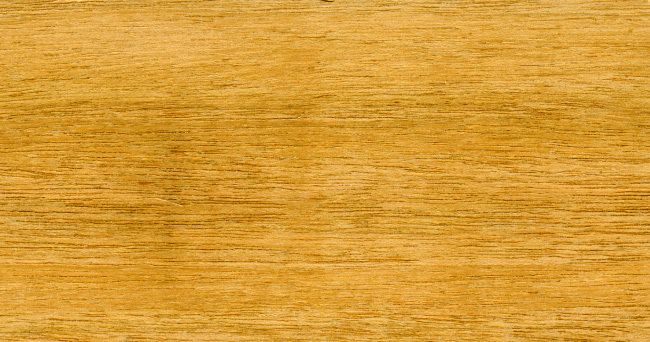
The contrasting streaks of Wenge wood. Photo: Böhringer Friedrich / Wikimedia Commons — CC BY-SA 2.5 .

Wenge also reveals its character during the making process: its hardness requires sharp tools and patience, and it responds particularly well to wax finishes, which enhance its depth without concealing it. A demanding wood, but one that rewards the craftsman many times over.
04
The art of showcasing it
Rare, dense and elegantly dark, Wenge is by nature an exceptional wood, reserved for pieces designed to stand apart.
In fine cabinetmaking and furniture, it brings a depth few other woods can match: trays, tables, lighting and decorative objects where its dark tone becomes a signature in itself. It is superb as a veneer, dressing furniture with its distinctive striped pattern, and equally striking when contrasted with pale woods or metals in marquetry and mixed-material compositions.
Instrument makers appreciate it for guitar fingerboards and other musical applications, where its density contributes to performance. Sculptors and woodturners value it as a noble material capable of taking a remarkable polish.
At WOULEY, it is chosen for some of the most refined pieces in our lighting, corporate gifts, furniture and decorative collections — wherever dark elegance is preferred to brightness.
05
Caring for its beauty
Wenge requires little maintenance, but its depth deserves to be treated with care.
- To preserve its intense dark color: keep it away from prolonged direct sunlight, which can gradually dull and grey dark woods. Wenge is at its best indoors, away from excessive exposure.
- Nourish its color: an occasional application of wax or oil can revive its depth and highlight its distinctive striped grain. Wax-based finishes are particularly well suited to it.
- For everyday care: a soft dry cloth, or one that is only slightly damp, is generally sufficient. Avoid aggressive cleaning products and excess water.
- Primarily an indoor wood: although highly durable and technically capable of outdoor use, Wenge reveals its finest elegance when protected indoors in furniture and decorative applications.
06
Wenge at WOULEY
Choosing Wenge means acquiring a rare fragment of Africa: a slow-growing, dense and deeply expressive wood that may have taken two centuries to become what it is. This rarity also brings responsibility. Wenge is today a vulnerable species affected by overexploitation; this is why we use it with restraint, relying on responsible and traceable sourcing and ensuring that every piece honors the tree from which it came. Building a bridge between contemporary craftsmanship and the richness of our continent's wood species, without exhausting them: this is what drives us.