
WOULEY · Materials & craftsmanship
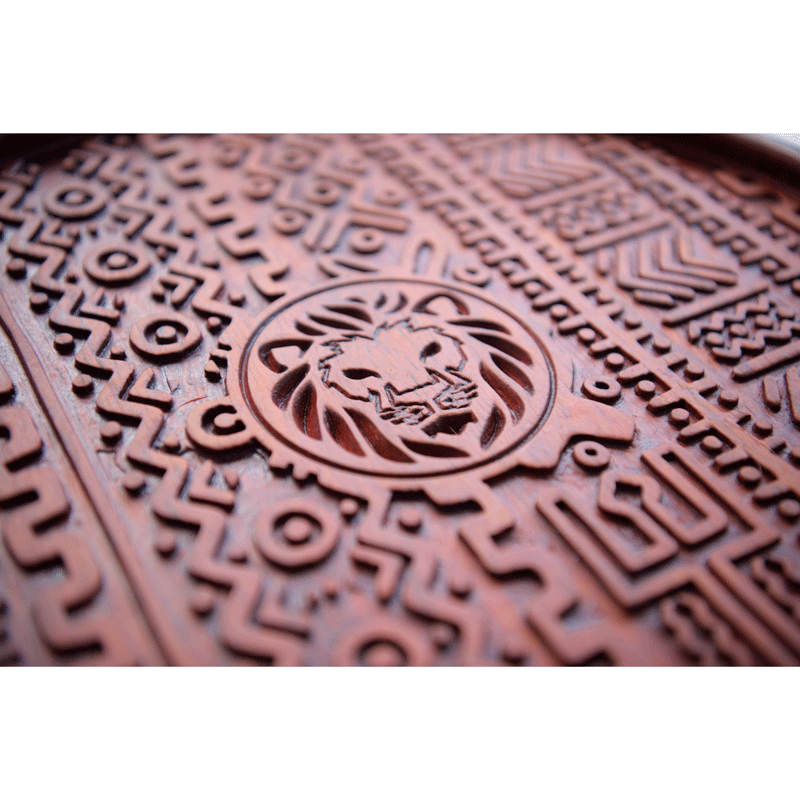
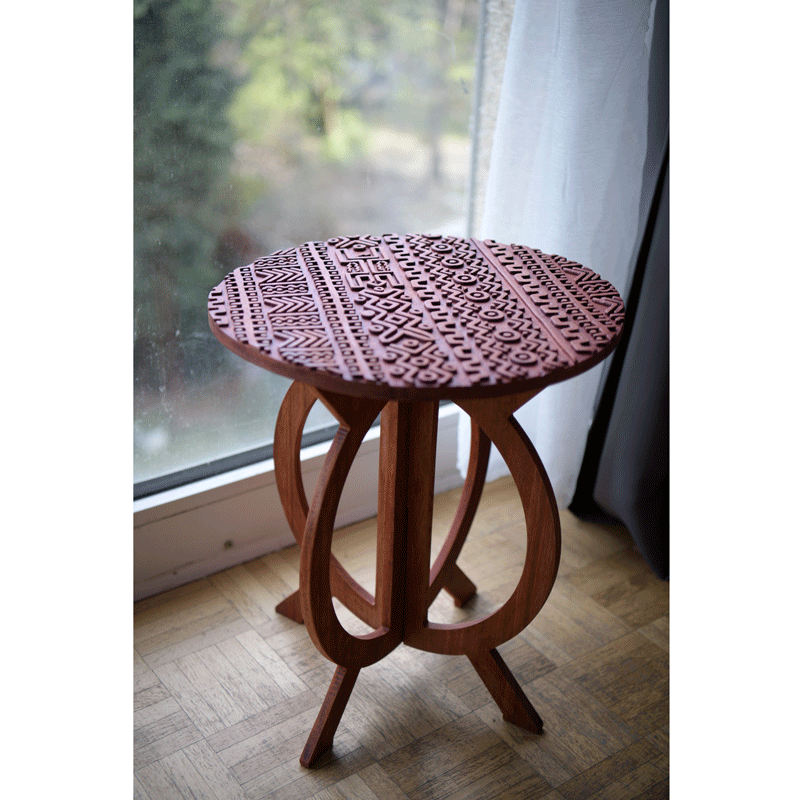
Carved Padouk, detail of a WOULEY creation.
Few woods tell the story of Africa with as much brilliance as Padouk. When freshly cut, it reveals an incandescent coral-red color that catches the eye before the hand even touches it. Yet its beauty is only the first of its qualities: behind it lies a rare technical nobility and a ritual history spanning several centuries. At WOULEY, where wood is our primary material and Africa our point of reference, Padouk holds a special place. Let us introduce you to it.
01
A tree from Central Africa
African Padouk refers to the botanical species Pterocarpus soyauxii, a member of the Fabaceae family, which also includes acacias. It is a giant of the tropical forests of West and Central Africa — Cameroon, Congo, Nigeria, Angola and Benin — and can reach heights of up to fifty meters as it rises toward the canopy.
Wherever it grows, it has been noticed, named and honored. It is known as mbel in Cameroon, mukula in Congo and tacula in Angola; nineteenth-century English traders knew it as coral wood or “barwood”. This abundance of names already speaks to the deep connection between people and this tree with a heart of fire.

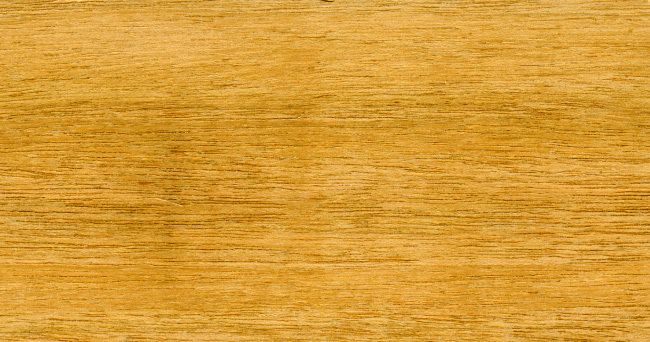
Padouk grain. Photo: Pernak / Wikimedia Commons — CC BY-SA 3.0 .
02
The mystique of red: a journey into the heart of Africa
Close your eyes for a moment. We are in the humid forests of the Congo Basin, where great Padouk trees rise toward the light. Beneath the bark, the heartwood is an almost unreal red — the red of embers, earth and blood. The peoples of Central Africa revered this color long before Padouk became prized as a cabinetmaking wood.
Padouk is more than beautiful: it can also become a pigment. By grinding its heartwood, a red powder known as tukula is obtained, one of the most sacred reds in African art. Mixed with palm oil, it becomes a paste with many uses — dye for raffia textiles, paint for masks and statues, and a precious cosmetic for the skin.
Let us travel to Kuba communities in the Democratic Republic of the Congo. On ceremonial days, dancers cover their faces and torsos with tukula; the red seems to ignite on the skin to the rhythm of the drums. The precious powder was kept in finely carved boxes decorated with geometric patterns — prestigious objects passed down as heirlooms. When the paste was cooked, it hardened into small decorated blocks known as bongotol, which could be offered to the deceased to accompany them into the afterlife. In this way, Padouk accompanied people from birth to death.

Ntshak cloth, Kuba-Bushoong culture, DRC. Raffia and plant-based dyes, including tukula. Muséum de Toulouse, D.2010.1.1. Photo: Ismoon / Wikimedia Commons — CC BY-SA 4.0 .
Let us travel farther, to Kongo lands. During the Tchikumbi initiation rite, a young woman entering adulthood is adorned with the red of Padouk, both beautified and protected by its color. In these cultures, red is never merely decorative: it represents life, fertility and vitality. It protects. It connects the living, the ancestors and the spirits.
This is the journey silently carried by every piece of Padouk. By working with it today, we continue a centuries-old conversation between the peoples of Africa and this tree with an incandescent heart.
03
An exceptional character
Behind its beauty, Padouk possesses the qualities of a great wood. It belongs to those species chosen to last a lifetime, standing alongside woods such as Ipe and Teak among the most sought-after.
First, it is a dense and substantial wood, with a reassuring presence. Its solid structure withstands impact and everyday wear, giving finished pieces remarkable durability over time — the assurance of an object designed to endure for years.
It also offers remarkable natural resistance. It is highly resistant to decay, termites and fungi without requiring chemical treatment, and it withstands exposure to the elements remarkably well. This is why it has historically been used for demanding applications, including ship decks. A form of nobility that owes nothing to chemistry and everything to nature.
Then comes one of its finest qualities, discreet yet invaluable: its stability. Where many woods move, swell or deform with changes in humidity and temperature, Padouk remains remarkably stable. A well-made piece stays that way — for years to come.
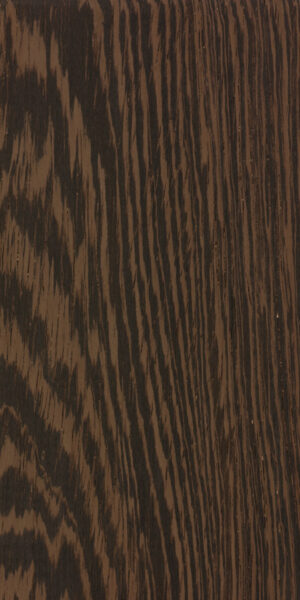
And then there is its color, its unmistakable signature. When freshly cut, Padouk reveals a flamboyant coral red, almost incandescent. With time and exposure to light, this red deepens into a sumptuous purplish brown before eventually developing, particularly outdoors, the silvery patina of a material that has lived. Far from being a flaw, this evolution is part of its elegance: the beauty of a wood that changes and tells the story of time.
04
The art of showcasing it
The combination of beauty, strength and stability gives Padouk a wide range of possibilities.
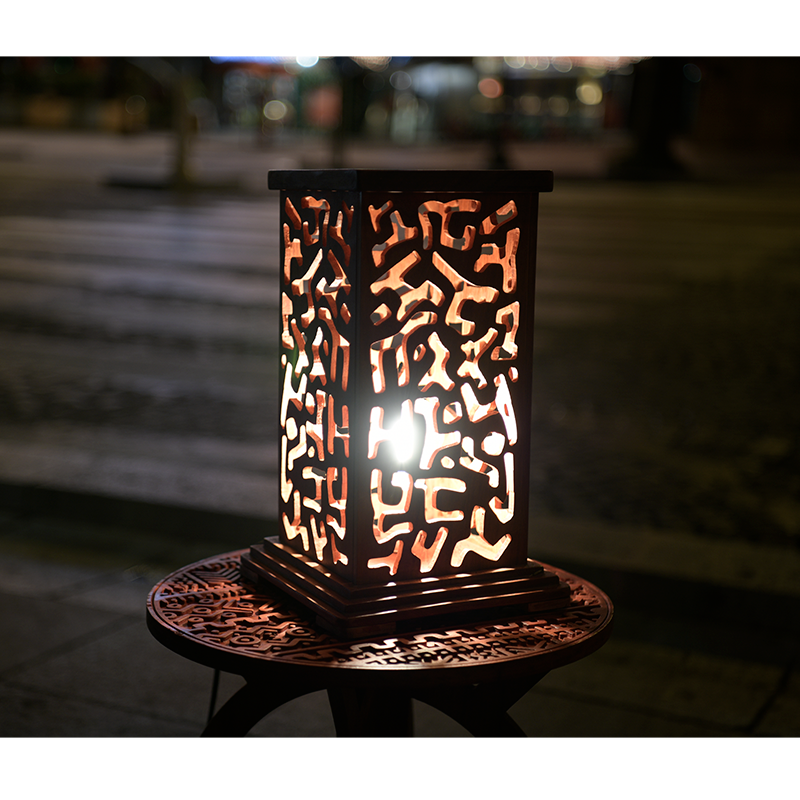
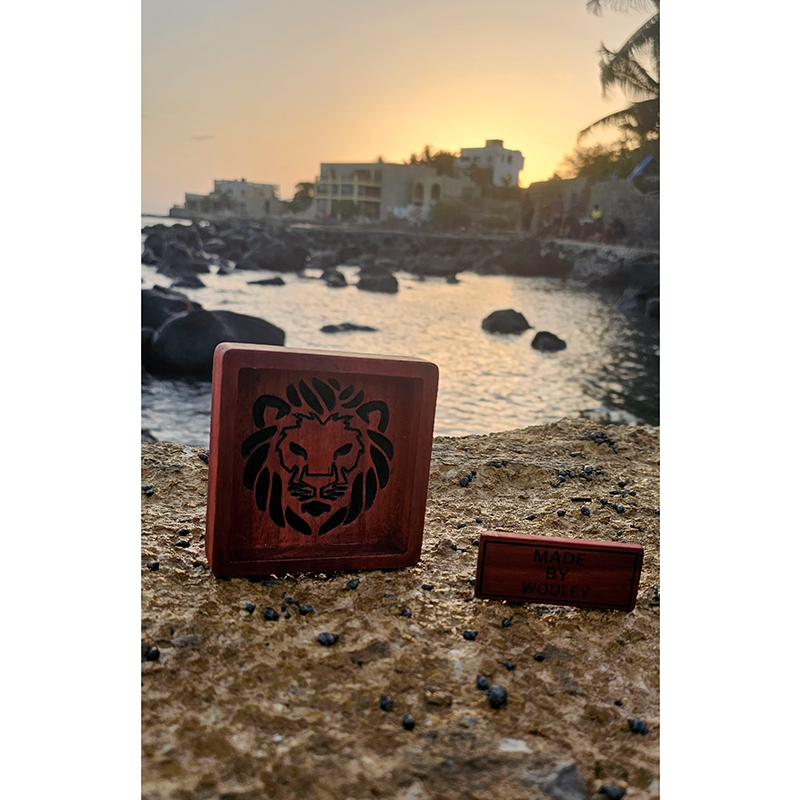
Indoors, it excels in furniture and decoration: trays, tables, lighting and statement pieces where its color becomes a design feature in its own right. Its homogeneous heartwood also makes it ideal for finely crafted objects — key rings, coasters, boxes and corporate gifts — where each piece celebrates the wood's natural red tones.
In musical instrument making, its acoustic qualities make it a sought-after material.
Outdoors, its natural resistance makes it a premium choice for decking, cladding and exposed joinery, alongside woods such as Iroko and Teak.
At WOULEY, Padouk naturally finds its place in our lighting, corporate gifts, furniture and decorative collections.


05
Caring for its beauty
Padouk requires little maintenance, but it invites a choice: preserve its red color or allow time to develop its patina.
- To preserve its original brilliance: keep it away from direct sunlight and occasionally apply an oil or varnish with UV protection. This will help slow down the natural evolution of its color.
- To embrace its natural patina: let the light do its work. The wood will gradually change from red to purplish brown and, outdoors, eventually to an elegant silvery grey — an appearance many consider one of its most beautiful expressions.
- For everyday care: a soft, slightly damp cloth is generally sufficient indoors. Avoid aggressive cleaning products.
- Outdoors: thanks to its natural durability, Padouk requires no preservative treatment. Occasional cleaning and a nourishing oil can revive its color if you prefer not to let it weather naturally.
06
Padouk at WOULEY
Choosing Padouk means bringing together in a single piece the presence of a great wood and the memory of a deeply African material. This is precisely what drives us: turning each object into a bridge between contemporary craftsmanship and the richness of our continent's wood species. As with all our woods, we favor responsible sourcing so that the beauty of Padouk never comes at the expense of the forest in which it grew.
WOULEY creation visuals: WOULEY. Documentary photographs: Pernak and Ismoon; credits and licenses are indicated beneath each image.